Theatre-goers know the feeling. They dress for it. They pay for it. They sit in their red-velvet seats and wait for it with a quiet, almost superstitious hope. The lights dim. A hush ripples across the auditorium like a held breath. And then, if you are lucky, it happens. An actor reaches across the invisible gulf between stage and stalls and touches something under your ribs. Not your intellect. Not your taste. Something older. Something animal. Your spine prickles.The body, which has spent the day armoured against emails and headlines and the polite numbness of modern life, is suddenly shaken awake. You feel your own aliveness again, tender, inconvenient, undeniable.
Over the years I have watched actors who are masters of technique. Faultless accents. Crystal diction. Every beat honoured with disciplined precision. I have watched others who are less polished but burn with urgency, who surrender so completely that you forgive the roughness at the edges. And then, rarely, there are those who hold both. Craft and risk. Control and abandon. Performers who understand the architecture of a score or script yet still seem to be discovering it in front of you.
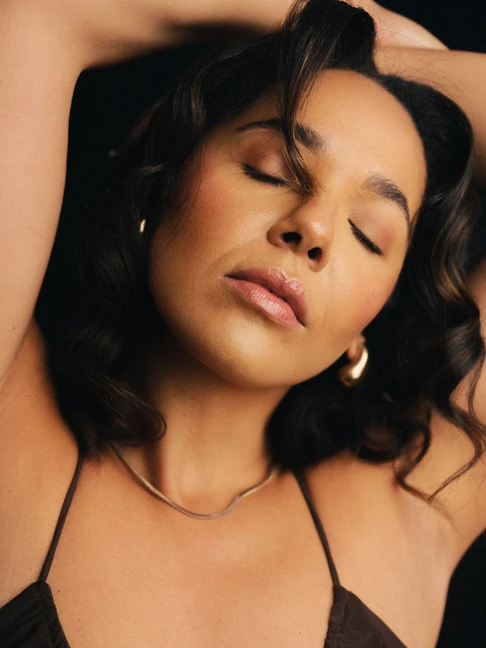
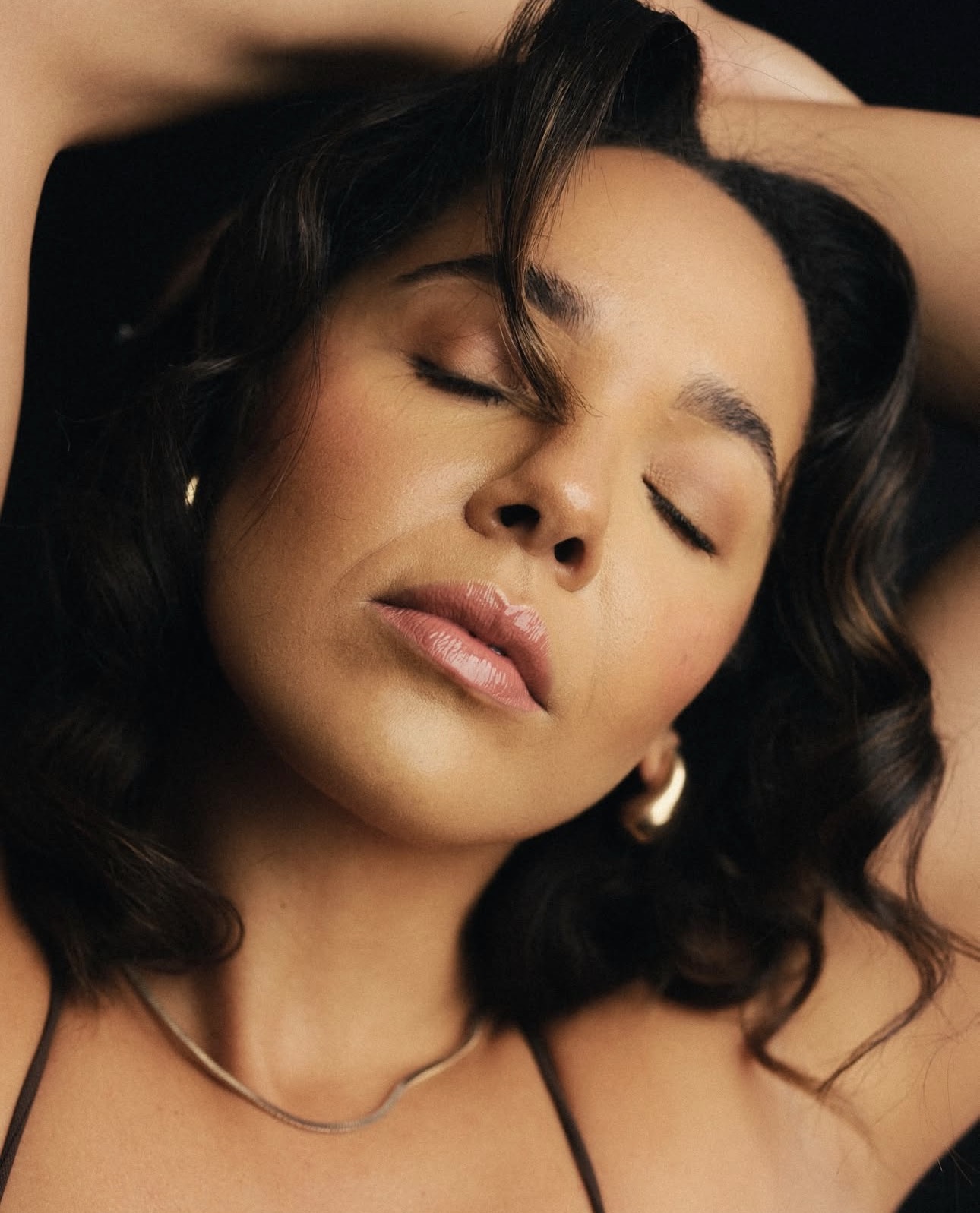
I was not prepared when Shanay Holmes stepped onto the stage of the West End’s Oliver!. It was a freezing London weekend and I had come simply to be entertained. Holmes had other plans. Known across British theatre for her commanding presence and vocal power, she carries the authority of a leading lady and the emotional transparency of someone with nothing to hide. It is no wonder she was awarded Best Female Lead Actor in a Musical at the Black British Theatre Awards in 2025. There is an inexplicable wonder to her craftsmanship, a rare alchemy of discipline and daring. As she sits opposite me now, generous and unguarded, ready to share the knowledge forged through years on stage, I am struck by the privilege of witnessing her brilliant mind at work.
AKTA: BBTA You are a BBT Award winner, producer and recording artist. Your career has been built without the traditional drama school route. How did you develop your craft and resilience in an industry that often insists there is only one path?
SHANAY HOLMES: I absolutely love what I do. Everything I create is rooted in a desire to evoke empathy, humanity and truth. I want people to feel seen and empowered through storytelling. That has always been the purpose.
I did get into one of the top drama schools in the country, ArtsEd, but that same year the government cut the funding for the grants I had planned on applying for. I remember receiving my acceptance letter and bursting into tears because I knew I couldn’t afford to go. It was a huge yes followed immediately by a no. I wrote to them explaining my situation, but there was no funding available.
So I went to every open audition I could find. One of them was for The Lion King. I did not get the job, but I made it to the final. At that final, I spoke to the casting director. She offered me a meeting at her office and called around ten agents on my behalf. Within a week, I had my first agent. Three months later, I booked my first West End role.
Not getting into drama school felt like a knife to the heart at the time because I had been taught that it was the first step to becoming a professional actor. When that door closed, I had to question everything I thought I knew about the “right” path. What I learned is that the power of the artist sits within you. We are called to create, not to follow a textbook.
Drama school can absolutely refine you. But talent, instinct and drive already exist inside you. I refined mine on the job. Fighting for every opportunity built a different kind of resilience in me. It forced me to think creatively about my own path and to understand that there are many roads to success.There is no guaranteed formula. Not drama school, not an agent, not even early success. You have to believe that your journey can look different and still be valid. There are so many ways to get where you want to go.
AKTA: You’ve faced real financial and structural challenges, yet your love for the craft feels intact. How did you protect that flame?
SHANAY HOLMES: I met a mentor, who is now my husband, when I was 19. He gave me advice that changed everything. He said, “Write in the centre of your palm the one thing you absolutely want to do.” I wrote singing. Then he said, “On each finger, write a way you can do that and earn money.”
So I did. Wedding singer. Function singer. Writing music. Tribute work. Musical theatre. I explored all of it. Some avenues worked, some did not, but I built a steady income through corporate and function singing while still auditioning. That meant I could save, support myself, and say yes to the work that truly moved my career forward instead of saying yes out of panic.
I think that mindset protects your love for the craft. Acting does not begin when you step on stage. You wake up as an actor. You go to sleep as an actor. Even if you are teaching, taking class, writing, or performing in unconventional spaces, you are still building your artistry. The moment you believe you are only an actor when you book a job is the moment the rejection starts to define you.

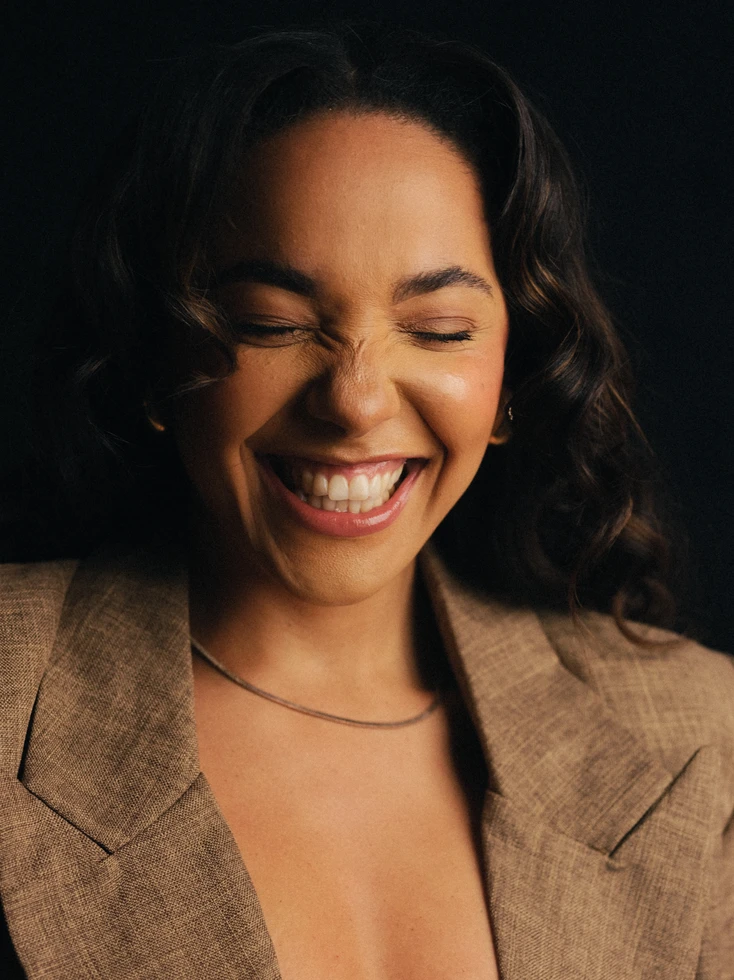
Shanay x Akta
AKTA: For many actors, getting to the West End feels almost like a mythic achievement, almost untouchable. Can you walk us through your journey into it, and what helped you stand out?
SHANAY HOLMES: After signing with my first agent, I auditioned for Thriller Live, the Michael Jackson musical. I grew up loving Michael Jackson, so walking into that room felt completely aligned. I sang my heart out and booked the job. I toured with the show and then spent a year in the West End. It was one of the most joyful experiences of my life.
When my contract ended, I was offered a second year, but I wanted to grow. Sometimes you have to choose career progression over comfort. I said no, focused on recording my own music, and stayed open.
Then I heard The Bodyguard was becoming a musical. I called my agent and said, “I have to be considered for Rachel.” They told me I wasn’t old enough and the only auditions left were for advanced dancers. I am not a commercial dancer, but I went anyway. Halfway through, I stopped and said to the casting director, “I’m not a dancer, but if you would just let me sing for you, you won’t regret it.” He told me to return later that day.
I waited four hours. I walked back into a room of eight people and told them, confidently, that I could sing Whitney. I sang “Saving All My Love.” The room went silent. From that, they created the role of a third cover for Rachel Maron just for me.
Sometimes you just have to shoot your shot. There is a difference between ego and confidence. I knew what I could do. That role became my first original West End musical, and understudying Heather Headley was like a masterclass every night. I watched, I learned, and when I went on, I was ready.
AKTA: Many actors say that singing, acting, and dancing are separate skills — but few talk about integrating them with emotional truth. When you prepare for a role, what’s your process for combining technical performance with deep psychological embodiment?
SHANAY HOLMES: I am a perfectionist. I am also my own harshest critic. There is nothing anyone could say about me that I have not already said to myself. It is not always healthy, but I am nerdy about this stuff and that has pushed me to refine my craft. If I feel there is something I do not fully understand, I have to go and learn it.
During The Bodyguard, I was surrounded by heavyweight stage and screen actors. Watching them stirred something in me. I realised that while I could sing the role, I wanted to understand the acting on a deeper, technical level. I did not want to wing it.
So I enrolled at The Actors Centre and began studying Meisner with Scott Williams. I fell in love with the technique. It changed everything. There was a noticeable shift in the roles I booked afterwards because I felt grounded not just as a singer, but as an actor. I even began applying Meisner principles to how I approached songs, treating them as living, reactive moments rather than performances.
I truly believe skill is developed through obsession and dedication. Talent might be a spark, but excellence is hours and hours of study, repetition and curiosity. If you commit to refining your craft, whether that is singing, acting or dancing, you will not be the same artist a year from now.